Developing an understanding of the key distinction between bag and pad work gloves can assist fighters in choosing the right set of protection, enhance training comfort, and simultaneously receive more value from their core boxing gear. At Fistrage, boxing training gloves are designed to actively assist in repeated sets of punches during gym training.
Heavy bag sessions are repetitive, working on impact; pad work is repetitive and works on accuracy, speed, timing, and combinations. Selecting appropriate gloves can promote training comfort and ensure stable grip and technique.
Table of Contents
-
Can I use bag gloves for sparring or pad work?
-
Do pad work gloves need less wrist support than bag gloves?
-
Do bag gloves wear out faster than pad work gloves?
Can I use bag gloves for sparring or pad work?
At Fistrage, we demonstrate the key fact that heavy bag boxing gloves are primarily suited for pad work, considering that their core weight, along with fit and padding, actively matches your respective training requirements. However, bag gloves are not automatically suited for sparring, which thus demands adequate padding to offer protection to both fighters.
Thus, it is always important to check your coach’s recommendation and the sparring rules of the gym before using a pair. The main difference between bag gloves and pad work gloves depends on how each of the respective gloves handles the impact along with movement:
-
Bag Work: Gloves should have good, durable padding for repeated punching with a heavy bag
-
Quick combinations and accurate strikes: Gloves should allow easy hand work to ensure fast and efficient combinations and striking
-
Sparring: Gloves should have the proper weight and adequate, evenly-distributed padding to minimize impact to the sparring partner
However, there is not always quite a clear distinction between the two: the bag gloves and the pad work gloves. Bag and pad sessions use many of the same gloves that people use for bag work and the same gloves that are useful for pad work, so it's easy to find a single pair of training gloves that can be used for both types of training.
Do pad work gloves need less wrist support than bag gloves?
At Fistrage, we demonstrate the key factor that wrist support should primarily rely on the core construction of the glove, along with fit and training intensity, rather than whether you as a boxer are hitting either a heavy bag or pads.
Both of the corresponding activities involve repeated sets of impact, and thus secure wrist support along with a suitable level of padding is crucial. Pad work gloves do not thus need less assistance than bag gloves.
Here are the key pros of choosing versatile boxing training gloves:
-
Adaptability: Get a pair that is good for heavy bags and focus mitts.
-
Increased Efficiency and Value: If you possess a multi-functional type of gloves, you will need to buy fewer individual pairs of gloves for different types of training
-
Required support: Make sure your gloves fit well, hold your wrist properly, and provide good support for your hands while you do the exercise repetitively.
-
Standard fitting: Be aware that with your gloves you will have a consistent fit while carrying out your punching exercises.
Select durable materials when creating your gloves, use strong hook-and-loop fasteners, and add a comfortable lining. Choose durable materials when you use them, strong hook-and-loop fasteners, and comfortable padding.
Think about the size of the padding for the workout. Genuine leather can be durable if taken care of and maintained properly. The glove size and fit are another important aspect for comfortable wear.
Do bag gloves wear out faster than pad work gloves?
At Fistrage, we believe that the lifespan of the respective gloves depends more on training frequency, along with construction, impact intensity, and maintenance, rather than just the training category alone.
Heavy bag sessions can thus place a considerable and repeated level of stress on the padding. On the other hand, pad work can also cause wear. Thus, it is essential to inspect your gloves in a regular manner for compressed foam, loose stitching, damaged closures, and reduced level of wrist support.
|
Features |
Heavy Bag Boxing Gloves |
Boxing Pad Work Gloves |
|
Main issue |
Repeated heavy set of impacts |
Accuracy along with speed and core combinations |
|
Padding |
Designed to actively manage repeated sets of impacts |
Balancing movement and protection |
|
Wrist assistance |
Crucial for a consistent and repeated level of punches |
Equally crucial for secure strikes |
|
Wear factors |
Impact force and frequency |
Training volume and substantial glove construction |
|
Best choice |
Durable and well-padded gloves |
Responsive and comfortable set of training gloves |
Thus, the best training gloves for heavy bag and pad work should also combine an appropriate set of padding backed by a secure fit, reliable wrist support, and durable construction. As a boxer, you thus do not require two separate pairs if your key gloves are suitable for both activities.
Upgrade Your Training With the Right Gloves With Fistrage
The correct training gear helps you to concentrate on technique, consistency, and performance.
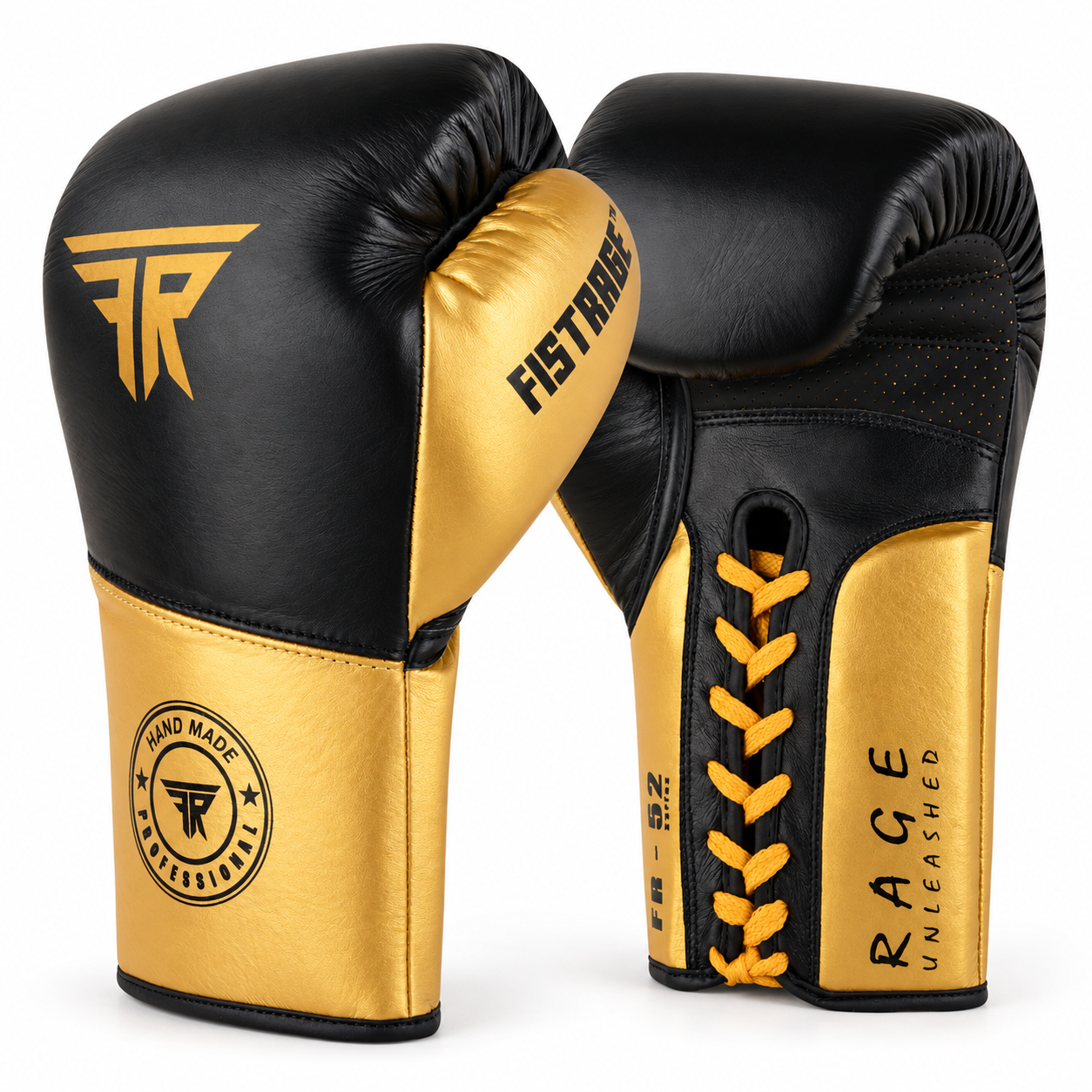
Contact Fistrage and check out the various kinds of training gloves, compare the FR-52 boxing gloves with Rigid, Knight, and Stinger gloves, and decide on a pair based on your training routine. Always wear gloves correctly, use appropriate instruction, and change gloves when the protective barrier has been compromised.
FAQs
When should I change out my boxing gloves?
Throw them away if the padding is compacted, the wrist closure is broken, the stitching is coming undone, or they are not providing the necessary support for the hand.
Do you need to wear hand wraps under training gloves?
Yes. Hand wraps support the hands and wrists, and offer an extra layer of protection when training.
How to care for boxing gloves after training?
Clean the outside, unzip or unbutton the closures, dry the glove outside in a well-ventilated space, and do not use heat directly on the outside to maintain the integrity of the material.